
Dental Bridges
In Pompano Beach, FL
A missing tooth leaves more than a gap in your smile. Over time, the teeth beside the space can drift toward it, and everyday moments like biting into an apple or laughing in a photo start to feel different. A dental bridge closes that gap with a custom replacement tooth fixed firmly in place, so eating, speaking, and smiling can feel natural again.
At Smile Design Holistic, Dr. Andy Baghaei and our Pompano Beach team replace missing teeth as part of our restorative dentistry services. We take time to understand your goals, explain every option in plain language, and choose durable materials with your overall health in mind, so you can feel confident about what goes into your mouth.
VISIT
100 SW 6th St,
Pompano Beach, Florida 33060
CALL
(954) 942-4836
CLOCK
MON 8 AM – 4 PM TUE 8 AM – 4 PM
WED 8 AM – 4 PM THU 8 AM – 4 PM
FRI 8 AM – 4 PM
MON 8 AM – 4 PM
TUE 8 AM – 4 PM
WED 8 AM – 4 PM
THU 8 AM – 4 PM
FRI 8 AM – 4 PM
What Is a Dental Bridge?
What Is a Dental Bridge?
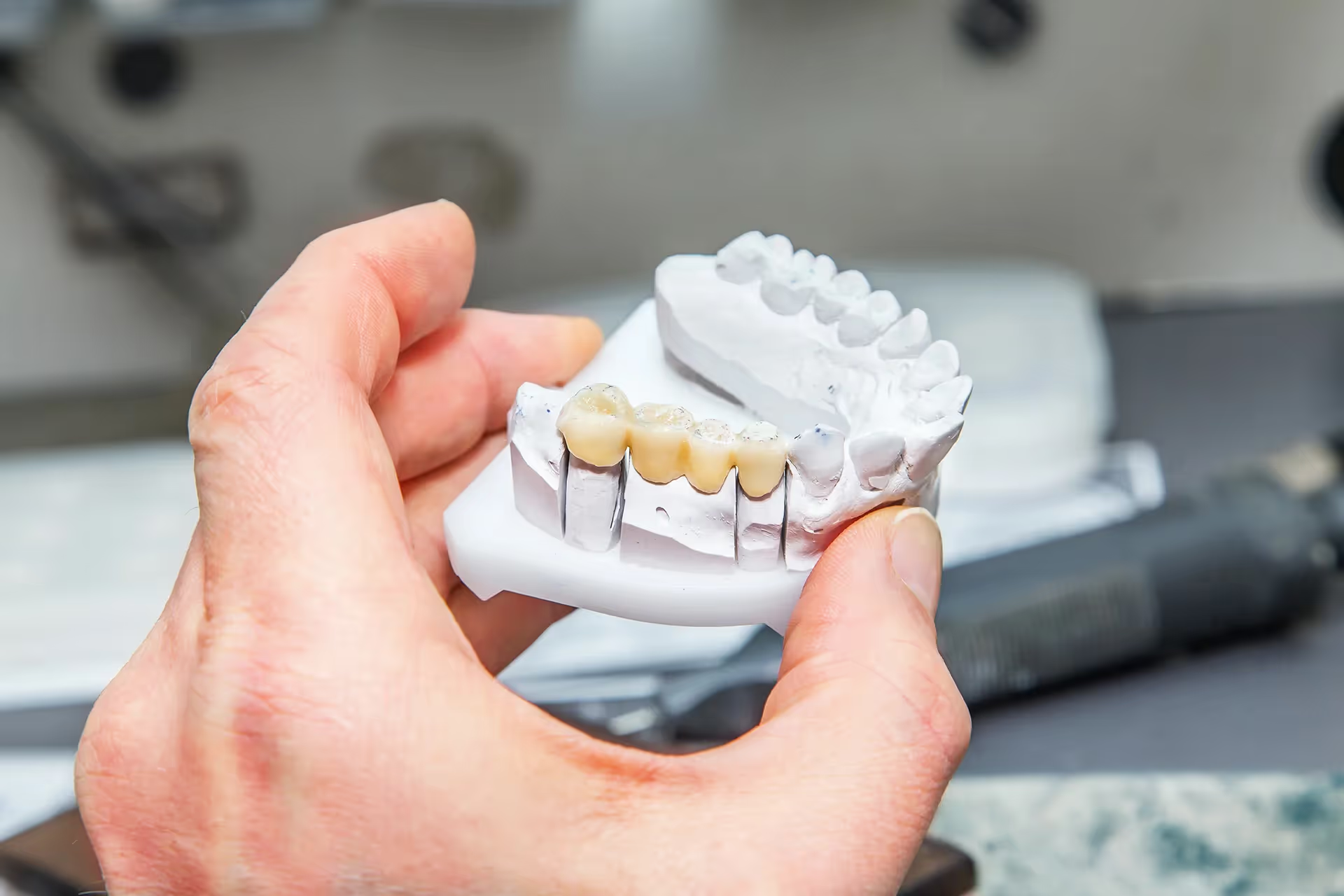
A dental bridge replaces one tooth or a short row of missing teeth with artificial teeth called pontics. The pontics are anchored by dental crowns placed on the natural teeth on either side of the gap, which are known as abutments. Together, the crowns and pontics form one connected restoration that fills the space and restores your ability to chew.
Unlike removable partial dentures, which come out for cleaning, a fixed bridge is cemented in place and only a dentist can remove it. That stability helps keep neighboring teeth from shifting into the gap and supports a more even bite. Because bridges rely on healthy teeth for support, the condition of your surrounding teeth matters, which is why we start with a careful exam.
Types of Dental Bridges
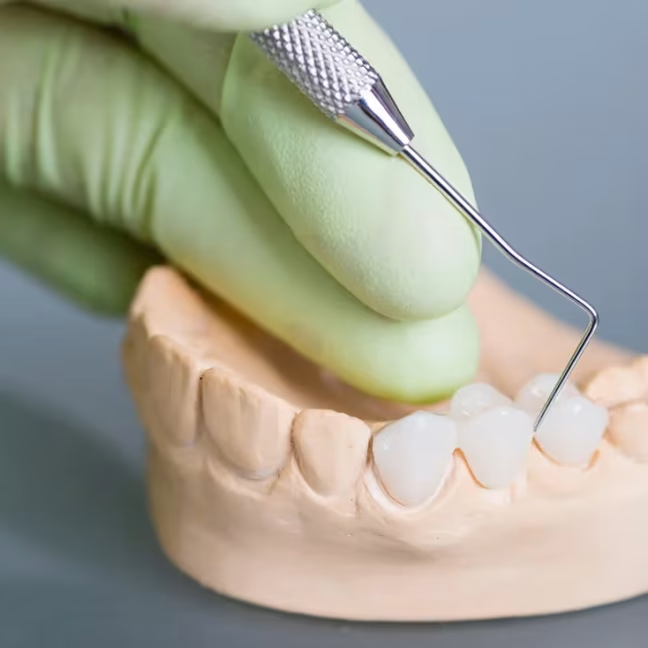
Dentists generally place four main types of dental bridges, and the right one depends on where the gap is and which teeth are available for support. Here is how they differ.
Traditional Bridge
Crowns on both ends hold the replacement tooth, which makes this the most common choice when healthy teeth sit on both sides of the gap.
Cantilever Bridge
A crown on only one side supports the replacement tooth, which can work when just one neighboring tooth is available but is not as strong as a traditional design.
Maryland Bridge
Metal wings bond to the backs of neighboring teeth, which is typically reserved for front teeth because it cannot handle heavy chewing forces.
Implant-Supported Bridge
Dental implants hold the bridge instead of natural teeth, and it is often considered when three or more teeth are missing in a row.
Each design has tradeoffs, and Dr. Baghaei can walk you through which one suits your gap, your bite, and your budget during an exam. If you would rather avoid reshaping nearby teeth, we can also talk about dental implants as an alternative.
Dental Bridge or Dental Implant?
Both options replace missing teeth, but they work very differently. A bridge borrows support from neighboring teeth and is usually completed faster, while an implant replaces the tooth root and stands on its own in the jawbone. The comparison below shows the most common tradeoffs.
| Dental Bridge | Dental Implant | |
|---|---|---|
| Surgery required | No | Yes |
| Neighboring teeth | Reshaped to hold crowns | Left untouched |
| Typical timeline | Two visits plus lab time | Several months of healing |
| Replaces the tooth root | No | Yes |
Neither choice is right for everyone. Gum health, bone support, the condition of nearby teeth, and your comfort with surgery all play a role, and the best answer often becomes clear after an exam and a conversation about your priorities.
What to Expect During Your Dental Bridge Visits
Getting a traditional bridge usually takes two visits, with a few weeks in between while a dental lab crafts your restoration. Local anesthesia keeps you comfortable throughout, and we explain each step before we begin.
Implant-supported bridges follow a longer timeline because the implants need several months to fuse with the jawbone before the bridge is attached. You may notice mild sensitivity or a short adjustment period as you get used to the new restoration, and we are happy to fine-tune the fit if anything feels off.
Exam and Numbing
We review your teeth and gums, then use local anesthesia so you stay comfortable.
Reshaping and Impressions
The supporting teeth are prepared and impressions are taken for the dental lab.
Lab Work and Temporary
A temporary bridge may protect the area while the lab crafts your restoration.
Final Fit and Bite Check
We check the fit and your bite, make adjustments, and cement the bridge in place.
How Long Dental Bridges Last and How to Care for Them
Bridges are durable but not permanent. Most last between five and 15 years, and some last longer with consistent care.
The foundation matters as much as the bridge itself, so protecting the teeth and gums that support it is the best way to extend its life. Brush twice a day, clean beneath the replacement tooth with floss threaders or interdental brushes, and keep up with exams and cleanings so we can catch small problems early.
Dental Bridge FAQs
How long does it take to get a dental bridge?
A traditional bridge usually takes two visits, with a few weeks in between while the lab makes the restoration. An implant-supported bridge takes longer because the implants need months to heal first.
Does getting a dental bridge hurt?
Local anesthesia numbs the area during treatment. Mild sensitivity or soreness afterward is common as you adjust, and we can fine-tune the fit if anything feels off.
How do I clean under a dental bridge?
Brush twice a day and use floss threaders or interdental brushes to clean beneath the replacement tooth. Regular exams and cleanings help protect the supporting teeth and gums.
How long does a dental bridge last?
Most last between five and 15 years, and some last longer with good care. Protecting the supporting teeth and gums is the biggest factor.
What is the difference between a bridge and a partial denture?
A bridge is fixed in place and only a dentist can remove it. A partial denture is removable and comes out for cleaning.
Can a missing tooth be replaced with something other than a bridge?
Yes. Dental implants and partial dentures are common alternatives, and an exam helps determine which one fits your situation.
Schedule Your Dental Bridge Consultation at Smile Design Holistic
Dr. Andy Baghaei earned his Doctor of Dental Medicine degree from Nova Southeastern University in 2005 and brings more than two decades of clinical experience to every treatment plan. Our team also includes Dr. Diego Azar, who has experience with full-mouth implant restorations, and Dr. Lauren Dreese, whose background includes prosthodontics, so you have thoughtful options for replacing missing teeth. We also work with financing options such as CareCredit and Cherry to help make treatment more accessible.
If a gap in your smile has been bothering you, contact our office to schedule a visit and learn which bridge option fits you best. You can also learn more about Dr. Baghaei and our team before your appointment, and we will be glad to answer questions along the way.